The graphic design industry is growing rapidly as businesses increasingly rely on visual communication to engage customers across digital and print platforms. Whether you’re a student, job seeker, freelancer, or entrepreneur, a Government Certificate Graphic Design Course can help you build the creative and technical skills needed for a successful career.
This comprehensive guide covers everything beginners need to know in 2026, including graphic design fundamentals, essential software, career opportunities, salary expectations, required skills, certification benefits, and frequently asked questions. If you’re planning to start a career in graphic design, this guide provides the roadmap to help you succeed.
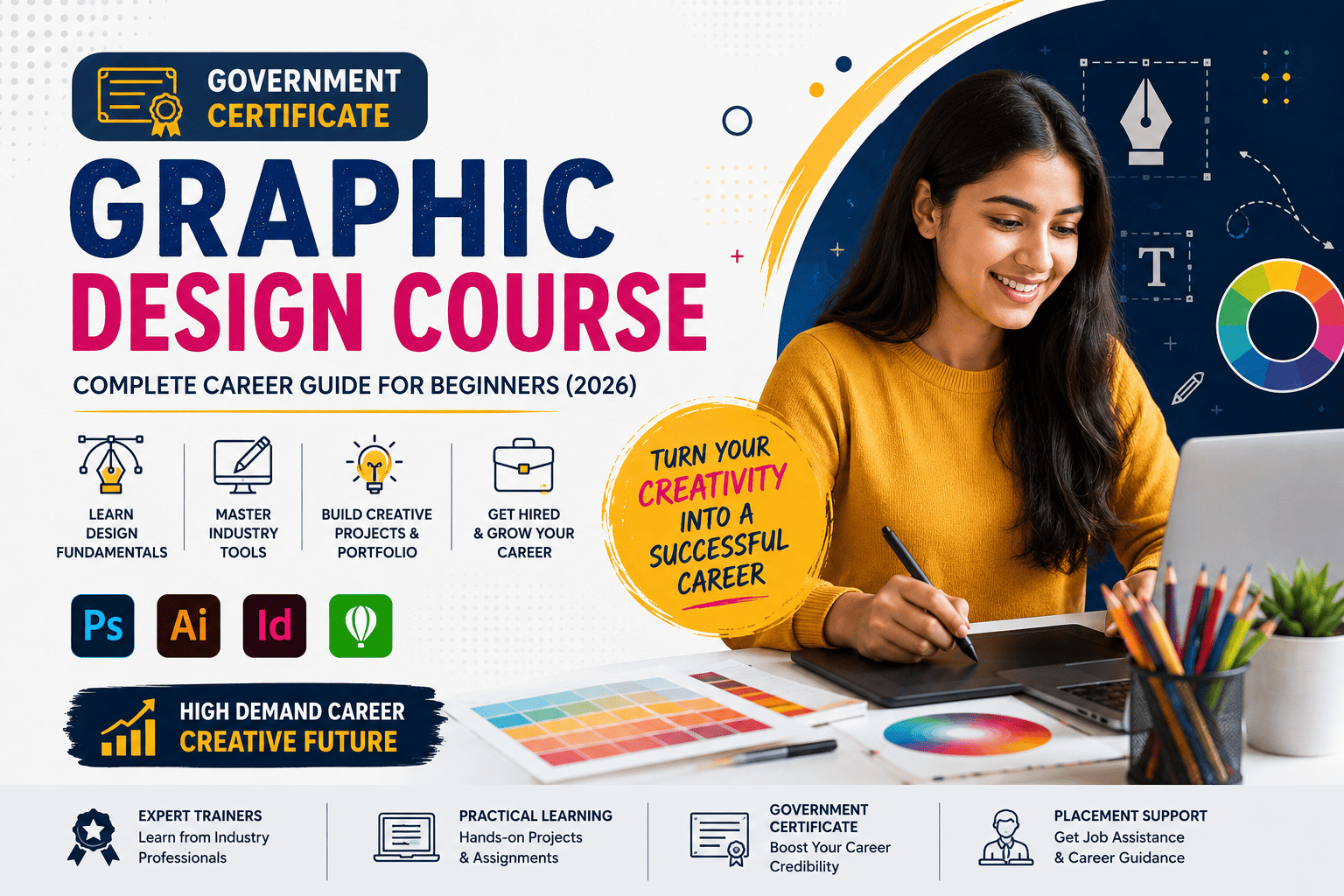
Government Certificate Graphic Design Course: Complete Career Guide for Beginners (2026)
What is Graphic Design?
Graphic design is the art and practice of creating visual content to communicate ideas, information, and messages effectively. Graphic designers combine creativity, typography, color theory, images, illustrations, and layouts to produce engaging visuals for both digital and print media.
Today’s graphic designers work on projects such as:
- Social media creatives
- Brand identity and logos
- Business brochures
- Product packaging
- Website graphics
- Mobile app interfaces
- Digital advertisements
- Posters and banners
- Magazine layouts
- Marketing materials
As businesses continue investing in digital marketing and online branding, the demand for skilled graphic designers continues to increase.
Why Choose a Government Certificate Graphic Design Course?
A Government Certificate Graphic Design Course provides structured learning aligned with industry standards while offering recognized certification that strengthens your resume.
Key Benefits
- Industry-relevant curriculum
- Hands-on practical training
- Portfolio development
- Project-based learning
- Experienced trainers
- Government-recognized certification
- Better job opportunities
- Freelancing readiness
- Entrepreneurial skills
- Updated software training
The certification also demonstrates verified skills to employers and clients.
Who Should Join This Course?
A graphic design course is suitable for:
- Students after Class 10 or 12
- College students
- Graduates
- Working professionals
- Marketing executives
- Social media managers
- Business owners
- Freelancers
- Content creators
- Digital entrepreneurs
No prior design experience is required for most beginner-level courses.
Skills You Will Learn
A professional Graphic Design Course covers both creative principles and technical software skills.
Design Fundamentals
- Design principles
- Color theory
- Typography
- Visual hierarchy
- Layout composition
- Branding concepts
- Creativity development
Software Skills
Students typically learn industry-standard tools such as:
- Adobe Photoshop
- Adobe Illustrator
- Adobe InDesign
- CorelDRAW
- Canva
- Adobe Express
- AI-powered design tools
Latest Graphic Design Trends in 2026
The design industry is evolving with AI and immersive technologies.
Popular trends include:
- AI-assisted graphic design
- Minimalist branding
- Motion graphics
- 3D illustrations
- Personalized marketing creatives
- Interactive visual content
- Sustainable packaging design
- AR/VR visual experiences
- Social media-first designs
- Data visualization graphics
Learning these trends helps designers stay competitive.
Career Opportunities After Completing a Graphic Design Course
Graphic design skills are valuable across multiple industries.
Popular career options include:
Graphic Designer
Creates branding materials, advertisements, brochures, and marketing assets.
UI Designer
Designs user interfaces for websites and mobile applications.
Brand Designer
Develops logos, visual identity systems, and brand guidelines.
Social Media Designer
Creates engaging posts, reels, banners, and campaign visuals.
Packaging Designer
Designs attractive product packaging for retail businesses.
Illustrator
Produces digital illustrations for books, advertising, and gaming.
Motion Graphics Designer
Creates animated graphics for videos and digital platforms.
Creative Designer
Works on advertising campaigns and promotional materials.
Freelancer
Provides design services to clients worldwide through freelance platforms.
Entrepreneur
Starts a graphic design agency or creative studio.
Graphic Designer Salary in India (2026)
Salary varies depending on skills, portfolio, experience, and location.
| Experience | Average Annual Salary |
|---|---|
| Fresher | ₹2.5–4.5 LPA |
| 2–5 Years | ₹5–8 LPA |
| Senior Designer | ₹8–15 LPA |
| Art Director | ₹12–25 LPA |
| Freelancers | Income varies based on projects and clients |
Professionals with expertise in branding, UI design, and AI-powered design tools often command higher salaries.
Essential Skills Every Graphic Designer Needs
Technical skills alone are not enough.
Successful designers also develop:
- Creativity
- Communication
- Time management
- Problem-solving
- Client handling
- Presentation skills
- Attention to detail
- Branding knowledge
- Marketing awareness
- Adaptability to new technologies
Why Portfolio Matters More Than Degrees
Employers often evaluate designers based on their portfolio rather than academic qualifications.
A strong portfolio should include:
- Logo designs
- Branding projects
- Social media campaigns
- Packaging designs
- Brochures
- Website mockups
- Poster designs
- Creative advertisements
- Personal design projects
Quality and originality matter more than the number of projects.
Industries Hiring Graphic Designers
Change block type or style
Move Paragraph block from position 65 up to position 64
Move Paragraph block from position 65 down to position 66
Change alignment
Change text alignment
Displays more block tools
Graphic designers are employed across many sectors, including:
- Advertising agencies
- Digital marketing companies
- IT firms
- E-commerce businesses
- Media houses
- Publishing companies
- Educational institutions
- Printing and packaging companies
- Startups
- Government organizations
- Entertainment and gaming studios
Freelancing Opportunities
Many graphic designers choose freelancing because it offers flexibility and access to global clients.
Common freelance services include:
- Logo design
- Brand identity
- Social media graphics
- Presentation design
- Packaging design
- Print media design
- Website banners
- Marketing creatives
Building a professional portfolio and maintaining strong client relationships are key to long-term freelance success.
How to Choose the Best Graphic Design Course
Before enrolling, consider the following:
- Government-recognized certification
- Updated curriculum
- Practical assignments
- Portfolio development
- Industry-experienced trainers
- Placement assistance
- Modern design software
- AI-integrated learning
- Internship opportunities
- Positive student reviews
Future Scope of Graphic Design
The future of graphic design remains strong as businesses continue to invest in digital content, branding, and visual storytelling.
Emerging opportunities include:
- AI-assisted design
- UX/UI design
- Digital advertising
- E-learning content
- Video content creation
- Motion graphics
- Metaverse experiences
- NFT artwork
- Virtual reality design
- Interactive media
Professionals who continuously upgrade their skills will enjoy excellent career growth.
Frequently Asked Questions (FAQs)
1. What is a Government Certificate Graphic Design Course?
It is a structured training program that teaches graphic design concepts, industry-standard software, and practical skills while providing a government-recognized certificate upon successful completion.
2. Who can join a Graphic Design Course?
Students after Class 10 or 12, college students, graduates, working professionals, freelancers, and entrepreneurs can enroll.
3. Do I need drawing skills to become a graphic designer?
No. Creativity and a willingness to learn design principles are more important than traditional drawing skills.
4. Which software should I learn for graphic design?
The most commonly used tools include Adobe Photoshop, Adobe Illustrator, Adobe InDesign, CorelDRAW, Canva, and AI-powered design applications.
5. Is graphic design a good career in 2026?
Yes. Demand for graphic designers continues to grow across industries such as digital marketing, e-commerce, IT, media, advertising, and entertainment.
6. Can I work as a freelancer after completing the course?
Yes. Many designers build successful freelance careers by offering branding, logo design, social media graphics, packaging design, and marketing creative services.
7. How much can a beginner graphic designer earn?
Freshers typically earn between ₹2.5 lakh and ₹4.5 lakh per year, while experienced professionals and freelancers can earn significantly more based on expertise and project volume.
8. Is AI replacing graphic designers?
No. AI is transforming workflows by automating repetitive tasks, but human creativity, strategic thinking, and brand storytelling remain essential. Designers who learn AI tools can enhance productivity and create more innovative work.
Conclusion
A Government Certificate Graphic Design Course is an excellent starting point for anyone looking to build a rewarding creative career in 2026. By mastering design principles, industry-standard software, and AI-assisted tools, you can unlock opportunities in branding, advertising, digital marketing, UI design, freelancing, and entrepreneurship.
Whether your goal is to secure a full-time job, launch a freelance business, or create compelling visual content for your own brand, investing in professional graphic design training equips you with the practical skills and portfolio needed to succeed. As the demand for visually engaging digital experiences continues to grow, skilled graphic designers will remain valuable assets across industries.